
Category: Uncategorized

  • Odoo 20’s Shift in Arab ERP Engagement

    Odoo 20’s Shift in Arab ERP Engagement

    Odoo 20 is not just an upgrade; it signals a strategic pivot in ERP adoption, especially within the Arab region. This narrative uncovers how AI integration and localized features disrupt conventional sales behaviors and customer expectations, reshaping how enterprises engage with ERP systems in Arabic-speaking markets.

    Localized ERP Demand in the Arab Market

    ERP systems are witnessing rising demand in the Arab region driven by increasing digital transformation initiatives tailored for local business practices and cultural context. This surge emerges from businesses previously underserved by generic, Western-centric ERP solutions. The demand underscores a shift in customer expectations toward solutions that speak their language, both literally and figuratively, signaling a deeper need for cultural resonance in software adoption.

    Evolving Customer Expectations Around Usability

    Arab users of ERP systems now prioritize intuitive usability and seamless workflows more than ever. This trend reflects a larger global preference for software that minimizes complexity and speeds onboarding. As enterprises grow accustomed to consumer-grade digital experiences, ERP usability becomes a critical competitive factor. Customers expect ERP platforms to anticipate their needs, not just function as tools, altering the psychology around software investment.

    AI Connect as a New Engagement Vector

    Odoo 20’s AI Connect enters not as a mere feature but as a foundational engagement layer enabling conversational AI and intelligent automation throughout the ERP. This shift transforms system interaction from transactional to relational, meeting customers on their terms. The timing coincides with broader AI maturity, enabling real-time assistance, predictive insights, and proactive operational support, which align with shifting buyer behavior towards demand for immediacy and relevance.

    Shift From Product to Experience-Centric Sales

    Traditional ERP sales models focused on feature lists and ROI projections are increasingly ineffective. Buyers—especially in the Arab market—demand experiential validation: demonstrations of how systems improve day-to-day operations and relieve cognitive load. This trend pushes sales teams to become trusted advisors, emphasizing personalized onboarding and continuous value delivery over one-time transactions, redefining sales psychology in ERP.

    Integration of Arabic Language and Cultural Nuances

    The integration of full Arabic language support and localization in Odoo 20 addresses crucial barriers that once limited ERP adoption in the region. Beyond language, cultural nuances embedded in workflows and documentation enhance relevance and adoption rates. This approach reveals that mere translation is insufficient; cultural fit represents an emerging customer expectation that drives deeper ERP engagement and loyalty.

    Behavioral Shift Toward Autonomous System Interaction

    With AI Connect and improved UI/UX, users in Arab markets exhibit a growing preference for autonomous system interaction, reducing dependency on human intermediaries. This behavioral change indicates a trust shift where users expect ERP systems to be proactive agents rather than passive repositories of data. Sales strategies must adapt to highlight these autonomous capabilities as key benefits, signaling a deeper market transformation in use patterns.

    The Decline of Traditional ERP Sales Channels

    LinkedIn and community conversations reveal a decline in the effectiveness of conventional ERP sales channels such as cold outreach and static demos. Buyers increasingly research ERP systems via peer networks, AI-driven insights, and trial experiences before engaging sales teams. The erosion of traditional sales touchpoints challenges sales leaders to innovate engagement models that prioritize digital self-discovery and AI-facilitated decision support.

    Strategic Implication for Sales Teams in the Arab Market

    Sales teams must realign with culturally specific engagement tactics and leverage AI-driven tools to personalize outreach. Understanding the localized decision-making processes and aligning messaging to operational pain points improves resonance. Training must evolve to equip reps with skills in consultative selling that focuses on experience and outcomes rather than features, positioning the sales function as a strategic partner in digital transformation journeys.

    AI Connect as a Bridge to Future ERP Features

    The AI Connect platform introduced in Odoo 20 sets the foundation for future ERP innovations, opening paths for continuous learning systems, adaptive workflows, and deeper integration of AI insights into business processes. This forward-looking capability reflects a market shift where AI is embedded into core ERP, not an add-on, helping sales leaders frame Odoo 20 as a platform that evolves with customer needs and technological advances.

    Narrative Bridge to AI Connect and Arab Usage of Odoo

    The convergence of AI Connect and localized Arabic adaptations in Odoo 20 demonstrates how ERP solutions must evolve beyond technology to cultural and behavioral relevance. This dual focus reshapes market expectations and sales psychology, compelling leaders to rethink the problem CRM or ERP solves for Arab users—not merely efficiency but intelligent engagement that respects language, culture, and autonomy.

    Conclusions

    The evolution of Odoo 20 highlights a broader market shift towards culturally aligned, AI-engaged ERP solutions in the Arab world. Traditional sales approaches falter as customers demand usability, context, and intelligent engagement, making it essential for sales leaders to rethink strategies aligned with these new behavioral norms.
  • Rethinking Odoo 20’s Market Impact

    Rethinking Odoo 20’s Market Impact

    The arrival of Odoo 20 marks more than just a software update; it signals a fundamental shift in how ERP systems integrate AI and local market dynamics, especially in the Arab region. This narrative unpacks the evolving sales psychology and customer expectations reshaping ERP adoption today.

    AI at the Core of ERP Evolution

    The trend of integrating AI deeply into Odoo 20 is no longer optional but foundational. The emergence now is driven by data saturation and the necessity for intelligent automation in ERP tasks, from predictive analytics to smart workflows. This shift reveals customers expect ERP systems not just to manage data, but to anticipate needs and optimize operations proactively. Traditional ERP solutions that focus on static data processing are becoming obsolete, as businesses now require real-time, AI-driven decision support to maintain competitive edge. For sales teams, this means selling ERP not as a static tool but as a dynamic business intelligence partner.

    Regionalization Beyond Language

    Translating Odoo 20 into Arabic is one facet, but true regionalization goes further—aligning with local business practices, regulatory needs, and cultural nuances. This behavior emerges out of a clear client frustration with one-size-fits-all ERP platforms that fail to address specific regional workflows. Customers now expect ERP systems to be tailored ecosystems supporting unique market demands. This challenges traditional sales approaches that pitch global solutions without localization depth. Sales teams must now frame Odoo 20 not merely as multilingual but as culturally intelligent, signaling a profound shift in how software relevance is communicated in diverse markets.

    Customer Expectations for Seamless AI Connect

    With Odoo 20 enhancing AI connect capabilities, customers expect seamless integration between AI tools and their ERP environment. This trend emerges as businesses face complexity in managing multiple separate AI solutions. Customers now desire one cohesive system where AI augments core ERP processes effortlessly. This exposes a gap in traditional sales tactics that emphasize modular add-ons rather than integrated AI ecosystems. Sales leaders must pivot their narrative to demonstrate Odoo 20 as a coherent AI-powered platform that reduces operational friction and increases user adoption through unified, intuitive AI interfaces.

    Sales Psychology Shifting to Insight Facilitation

    The psychology of sales in the Odoo 20 era moves away from purely solution selling toward facilitating insights and foresight. Customers no longer want just functions; they want outcomes powered by data-driven intelligence. This trend arises from buyers being more informed and skeptical of feature dumps. They seek partners who help decode complex data into actionable business strategies. This evolution undermines traditional feature-focused sales that lean on technical spec sheets. Sales teams must adopt a consultative mindset focused on storytelling with data, showing how Odoo 20 generates predictive insights tailored for business growth.

    Frustration with Legacy ERP Complexity

    Arab markets using ERP have expressed growing frustration with legacy systems that are rigid and difficult to customize. This intensifies now as businesses scale and require agile, adaptive systems. The current behavior signals a clear rejection of ERP as an IT silo and a demand for business-centric platforms. Customer expectations tilt towards streamlined implementation and rapid ROI. Traditional sales rooted in complex customization timelines and heavy IT dependencies lose credibility. The implication for sales forces is to highlight Odoo 20’s agility and plug-and-play adaptability as a strategic advantage in modern Arab business contexts.

    Automation Fulfilling Compliance Needs

    Odoo 20’s timely response to local tax automation and regulatory compliance has become a critical expectation. This trend is emerging from intensified governmental regulations in Arab countries requiring digital transformation in finance processes. Customers now expect ERP tools to not only streamline operations but ensure compliance effortlessly. This diminishes the effectiveness of traditional sales narratives that treat compliance as an afterthought or add-on service. Sales strategies must elevate compliance automation as a core value driver of Odoo 20, emphasizing error reduction, audit readiness, and peace of mind for CFOs.

    Evolving Role of Arabic Content in Adoption

    Providing Odoo 20 in Arabic is foundational but no longer sufficient alone for market penetration. The emerging behavior includes demand for comprehensive Arabic content—training, community support, and documentation. Customers expect full ecosystem support in their language to accelerate adoption and reduce friction. Traditional sales approaches that overlook content localization reduce user confidence and slow scaling. For sales and growth leaders, investing in Arabic content infrastructure is a strategic imperative that directly correlates with customer satisfaction and retention rates in the Arab market.

    User Experience Customized for Arab Business Culture

    Odoo 20’s user experience (UX) is being reconceived to reflect Arab business culture preferences—prioritizing hierarchical workflows, decision-making practices, and communication styles. This emerges as businesses reject generic UX that does not match their operational reality. Customers have started to expect ERP platforms that intuitively respond to their mental models and decision hierarchies. This trend challenges sales teams to explain UX customization beyond superficial UI tweaks, framing it as essential to achieving business efficiency and user engagement in regional deployments.

    The Shift toward Proactive Support Models

    A notable shift in customer behavior is the demand for proactive, AI-enabled support models embedded within Odoo 20. This trend arises from frustration with reactive, ticket-based support that prolongs downtime. Customers now expect AI to anticipate issues and enable self-service resolutions within the ERP. This calls into question older sales models that promise reactive help desks as a competitive edge. Sales narratives must evolve to promote intelligent support as a standard feature that reduces operational risk and empowers users continuously.

    Connecting AI Connect to Arab Market Growth

    AI connect in Odoo 20 is not just a technical feature but a strategic lever for growth in Arab markets. This reveals a deeper market shift where technology adoption aligns with economic expansion and digital transformation agendas across the region. Customers expect AI connect to facilitate smarter decision-making, optimize supply chains, and unlock new revenue streams. Traditional sales efforts focused on generic AI capabilities are less compelling than those articulating clear growth outcomes tied to regional development goals. This narrative bridge positions AI connect as a catalyst for competitive advantage and long-term business resilience in Arab economies.

    Conclusions

    Odoo 20’s evolution challenges traditional sales tactics by demanding a nuanced understanding of AI-enabled features and regional customization. For sales leaders and founders targeting Arab markets, this means redefining value propositions through cultural and technological fluency, unveiling a new frontier in ERP-driven growth.

  • Why Odoo 20 Is Redefining ERP Engagement

    Why Odoo 20 Is Redefining ERP Engagement

    The launch of Odoo 20 marks more than just an upgrade—it triggers a fundamental shift in how enterprise resource planning (ERP) systems are adopted and used, especially in non-Western markets like the Arab region. Amid evolving customer expectations and a changing sales psychology, traditional ERP engagement models are losing their effectiveness. This narrative explores the hidden market forces reshaping enterprise software adoption today.

    Localized ERP Demand in the Arab Market

    The Arab region is experiencing accelerating demand for ERP systems tailored to local languages and business practices. As companies grow digitally native, they require platforms like Odoo 20 to support Arabic language interfaces, cultural workflows, and region-specific regulations. This trend emerges from both the demographic boom of young entrepreneurs and increased government digital transformation pushes, signaling a shift from generic to localized ERP solutions.

    Evolving Customer Expectations Around Usability

    Customers today demand ERP platforms that are not only functional but intuitive and adaptive to their context. Odoo 20’s enhancements in UI/UX reflect a deeper market realization: buyers expect systems that simplify complexity rather than add layers of technical burden. This shift points to a sales psychology where ease of use and cultural familiarity heavily influence buying decisions in enterprise software.

    AI Connect as a New Engagement Vector

    The integration of AI Connect in Odoo 20 introduces a paradigm where AI is not a standalone feature but a connective tissue enhancing user workflows. This AI-driven interactivity resonates with buyers who now expect smart, anticipatory systems that reduce manual input and provide proactive insights. This expectation shift reduces interest in ERP solutions treated purely as tools and elevates demand for intelligent platforms.

    Shift From Features to Behavioral Impact

    The sales narrative around ERP is pivoting from emphasizing feature lists to demonstrating behavioral change impact. Buyers want proof that adopting Odoo 20 will transform team dynamics, decision-making speed, and operational fluidity. This reflects a deeper understanding among customers that software purchase decisions are ultimately about improving human and organizational behavior, not just technology adoption.

    Cultural Resonance as a Differentiator

    Odoo 20’s success in Arab markets will depend heavily on its ability to resonate culturally. This means embracing not only language but business customs, communication styles, and regional economic realities. Sales leaders must reframe ERP adoption as a culturally grounded transformation rather than a technical upgrade, signaling a narrative shift that traditional sales pitches often overlook.

    Emerging Frustrations with Legacy ERP Models

    Discussions among Arab business communities reveal growing frustrations with legacy ERP systems perceived as complex, inflexible, and poorly adapted to local needs. Odoo 20’s modern architecture directly addresses these pain points, but the real market movement is in rejecting one-size-fits-all approaches. This competitive dynamic represents a repudiation of past ERP sales strategies and a call for renewed behavioral insights.

    The Psychological Stakes of Adoption

    ERP adoption psychology in the Arab region is shifting towards trust, transparency, and empowerment. Buyers exhibit skepticism toward overly technical sales claims and seek vendors who demonstrate an understanding of their unique operational realities. Odoo 20, backed by AI Connect, offers a trust-building narrative centered on empowerment through technology that reduces friction and supports confident decision-making.

    Strategic Implications for Sales Teams

    Sales teams must evolve their approach from transactional selling to consultative engagement, emphasizing listening and cultural fluency. They need to present Odoo 20 not just as software but as a transformative partner helping businesses navigate digital change in culturally relevant ways. This involves crafting narratives that highlight AI Connect and new feature benefits within the context of behavioral outcomes and business growth.

    Why Arabic Language Support Is Only the Beginning

    While Arabic interface support is a game-changer, the deeper opportunity lies in integrating language with AI-driven personalization and localized workflow automation. This layered approach addresses intrinsic customer expectations for software that feels native and anticipatory. Odoo 20’s new features enable a tailored experience that goes beyond surface localization to embed itself in the daily rhythms of Arab business operations.

    The Broader Narrative Shift Toward Intelligent ERP

    Odoo 20’s market story encapsulates a wider industry shift: ERP systems are evolving from static platforms into dynamic, intelligent ecosystems. This transformation aligns with broader digital transformation trends but is also marked by new sales psychology that prioritizes behavioral change, cultural adaptation, and AI connectivity. For Arab businesses, embracing this narrative means redefining ERP as a strategic asset integral to growth, not merely an operational tool.

    Conclusions

    Odoo 20’s evolution highlights a deeper transformation in enterprise software: localized, intelligent, and behaviorally attuned solutions are becoming the new norm. For sales leaders and growth-focused businesses, embracing these changes requires rethinking engagement strategies beyond product features, focusing instead on cultural resonance and AI-driven connectivity. This shift opens fresh pathways for Arab markets leveraging Odoo and AI integrations.

  • Harnessing Odoo 20 and AI Connect for Enhanced Business Productivity

    Harnessing Odoo 20 and AI Connect for Enhanced Business Productivity

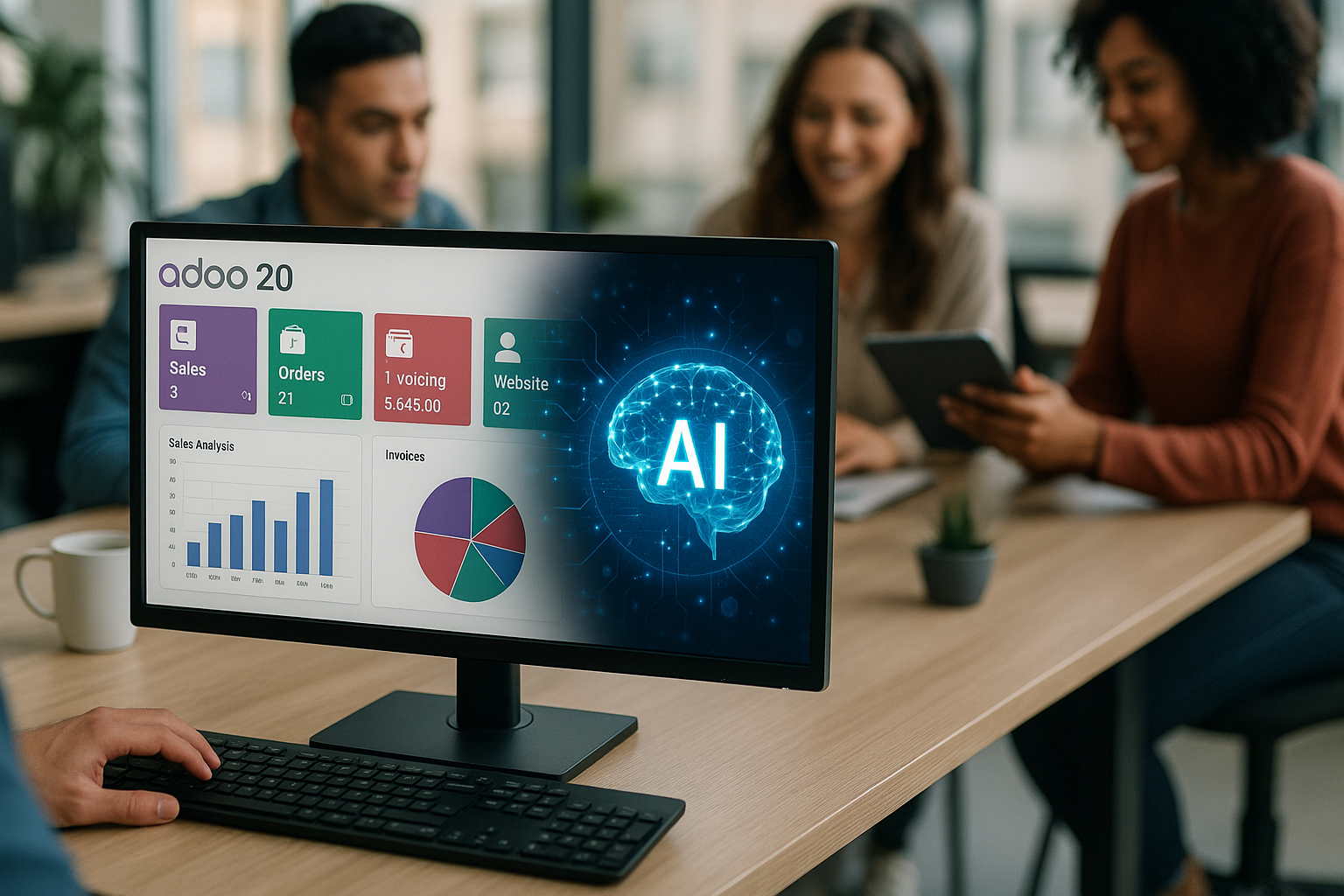
    In today’s fast-paced digital landscape, businesses must adopt innovative solutions to stay competitive. This article explores Odoo 20, an impressive suite of business applications, and its integration with AI Connect, which leverages artificial intelligence to streamline processes, enhance productivity, and improve decision-making. Discover how these powerful tools work together to transform your business operations.

    Understanding Odoo 20

    Odoo 20 represents a significant evolution in business management software, grounded in a modular architecture that empowers organizations to tailor their systems precisely to their operational needs. This version expands on its comprehensive suite of applications, providing refined capabilities in eCommerce, CRM, accounting, inventory management, and beyond, all designed to integrate seamlessly within a singular platform. Such modularity ensures that businesses—from startups to enterprises—can adopt and scale functionalities incrementally without disruption. The open-source foundation of Odoo 20 plays a pivotal role in its continuous advancement, enabling a vibrant global community of developers and users to contribute enhancements, fix issues, and create specialized modules. This collaborative ecosystem not only accelerates innovation but also allows businesses to remain agile by incorporating cutting-edge features and best practices. Beyond functional breadth, Odoo 20 emphasizes user experience and automation readiness, reducing manual overhead and simplifying complex workflows. Its intuitive interfaces and adaptable design facilitate faster adoption and better alignment with unique business processes. Ultimately, Odoo 20 transcends traditional ERP limitations by offering a flexible, community-driven platform that dynamically evolves to meet varied business challenges, making it an indispensable asset in modern enterprise resource planning.

    The Power of AI Connect

    AI Connect significantly amplifies Odoo 20’s capabilities by embedding artificial intelligence directly into business workflows, revolutionizing operational efficiency and decision-making. This integration pioneers predictive analytics within Odoo modules, enabling businesses to anticipate market trends, optimize inventory levels, and forecast sales with greater accuracy. By leveraging machine learning algorithms, AI Connect analyzes vast datasets accumulated in Odoo’s CRM and sales applications, identifying patterns that human analysis might overlook, thus delivering actionable insights that inform strategic planning.

    Moreover, AI Connect enhances customer relationship management by enabling personalized interactions at scale. Utilizing natural language processing and behavioral analytics, it tailors communications and product recommendations based on individual customer preferences and past behaviors. This results in more effective marketing campaigns and higher customer retention rates, key drivers of business growth. Automation of routine tasks such as lead qualification, appointment scheduling, and customer support queries also reduces manual workload, allowing teams to focus on higher-value activities.

    Real-world implementation of AI Connect through Odoo 20 underscores its transformative impact. For example, a mid-sized retail company incorporated AI-driven demand forecasting to adjust purchasing strategies dynamically, significantly decreasing stockouts and surplus inventory. Another business utilized AI Connect’s sentiment analysis on customer feedback gathered via Odoo’s helpdesk module, refining service delivery and boosting satisfaction scores. These practical deployments demonstrate how AI Connect not only streamlines processes but also provides businesses with a competitive edge by unlocking new efficiencies and insights previously unattainable through traditional ERP systems alone.

    Synergizing Odoo 20 and AI Connect

    By integrating Odoo 20 with AI Connect, businesses unlock a powerful synergy that transcends traditional ERP capabilities. Odoo 20’s modular architecture and improved user interface provide a robust foundation for managing diverse enterprise functions, while AI Connect injects advanced cognitive abilities, enabling intelligent data interpretation across these modules. This fusion allows for enhanced, real-time insights—where raw data from inventory, sales, finance, and customer relationship management converge under AI-driven analysis to reveal actionable patterns previously obscured by volume and complexity.

    AI Connect’s machine learning algorithms excel at extracting predictive insights from Odoo 20’s extensive datasets, refining demand forecasting, optimizing supply chains, and tailoring marketing strategies with unprecedented precision. For example, the integration enables dynamic sales forecasting informed not only by historical trends but also external variables such as market sentiment or economic indicators—facilitating decisions that anticipate demand shifts and minimize surplus costs. Simultaneously, AI-powered anomaly detection within financial records helps identify discrepancies early, improving compliance and reducing risk.

    Moreover, AI Connect automates complex workflows within Odoo 20, intelligently allocating resources and prioritizing tasks based on predicted outcomes and historical performance metrics. This results in smarter operational scheduling, decreased downtime, and accelerated project delivery. The system continuously learns from ongoing business activities, adapting its suggestions to evolving objectives and market conditions, thereby fostering an environment of continuous improvement.

    To harness this potential fully, it is crucial to adopt best practices that emphasize data quality, user training, and iterative implementation. Ensuring clean, well-structured data within Odoo 20 sets the foundation for AI Connect’s models to perform optimally. Engaging cross-functional teams in the integration process promotes adoption and uncovers nuanced insights. Finally, employing phased rollouts with regular feedback loops enables refinement and scalability, embedding AI-enhanced intelligence deeply into everyday operations and driving sustained business growth through informed, agile decision-making.

    Conclusions

    In conclusion, integrating Odoo 20 with AI Connect presents a remarkable opportunity for businesses to enhance their operational efficiency and decision-making capabilities. With the combined power of a versatile business management system and advanced AI technologies, organizations are equipped to thrive in a competitive landscape. Embrace these innovations to boost productivity and unlock new growth avenues.